Most organizations build their mission, values, and brand as three separate projects. Culture is what happens when they finally work as one system, and campaigns are how people come to believe it.
Three good assets, no shared story
Walk into almost any growing company and you'll find the same three artifacts. A vision statement, refined at a leadership offsite. A set of values, printed on the breakroom wall. A brand guide, sitting in a shared drive. Each one was built with care, and each is great on their own.
The trouble is that they are often built separately. Strategy owned the vision. HR owned the values. Marketing owned the brand. Different teams wrote them, in different years, for different audiences. So when an employee asks "what do we stand for?", they get three answers…none of which truly connect.
Leaders often respond by launching a culture initiative as a fourth project. But culture isn't a fourth thing to build – it's what people experience coming from each of these core tenets of the company.
The model: the why, the how, and the what
The model we've used with clients treats mission and vision, values, and brand as three parts of one system. Each answers a different question, and each needs the other two to land.
- Mission & Vision is the why. It's the purpose that drives people, the company, and the future everyone is working toward.
- Values are the how. They describe how people work with each other and with partners: the behaviors you hire for, reward, and protect.
- Brand is the what. It's what the organization does every day, everywhere: every product, email, proposal, and customer conversation.
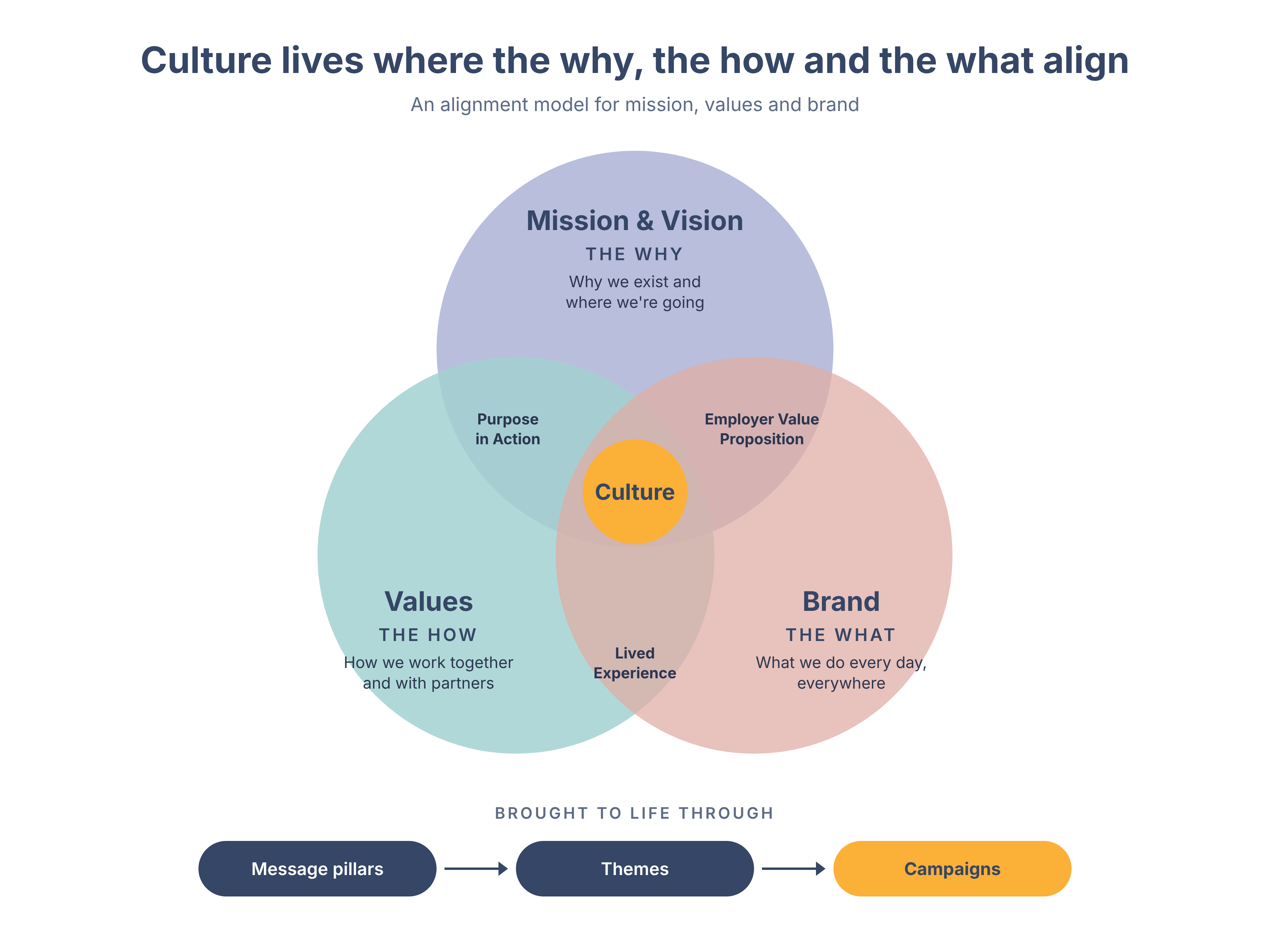
Culture sits where all three overlap. When the why, the how, and the what reinforce each other, employees can feel it and customers can see it.
From alignment to activation
Alignment on paper is only half the job. People don’t experience culture through statements; they experience it through stories, behaviors, and moments that repeat. Once the three elements are aligned, we turn them into something people can actually see and feel, in three steps:
- Core themes. We define three or four themes that every marketing and communications effort should express from here on. Each one ladders up to the mission and vision, values, brand, and culture, and gives them a clear point of view.
- Content campaigns. Each campaign puts one or more themes into action. Taken together, the campaigns show what the company truly is and what it stands for.
- Projects within each campaign. This is where it gets fun. We decide which content series to create, which channels fit each campaign, and how to focus every piece on its intended audience.

Everything here strengthens the culture internally and builds the brand externally. That’s the point of the model: one story, told in chapters, working on every audience at once.
One story, told everywhere
The organizations with the strongest cultures don't have better values statements than everyone else. They have one story, told many ways, and they tell it consistently: in how they hire, how they decide, what they sell, and what they publish. Aligning mission, values, and brand gives you that story. Themes and campaigns make sure people actually hear it.
If your three elements are each fine on their own but don't yet add up to a culture people can feel, that's the work we do. Let's talk.